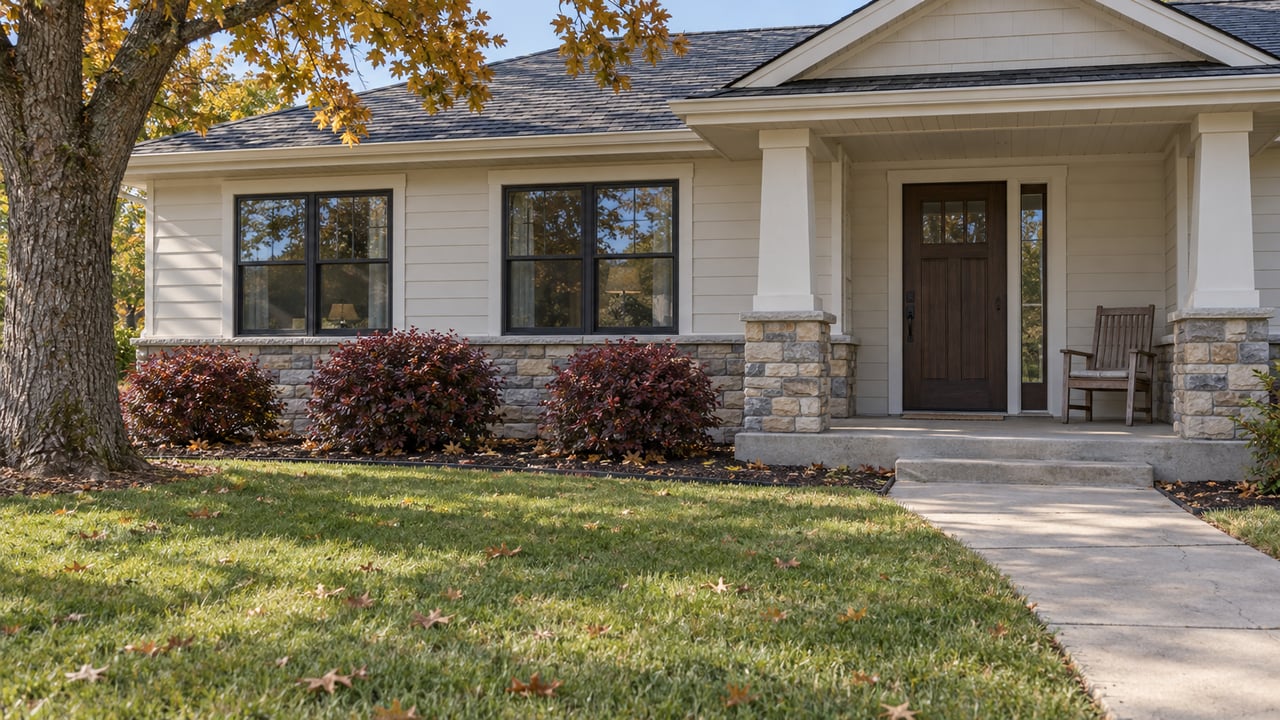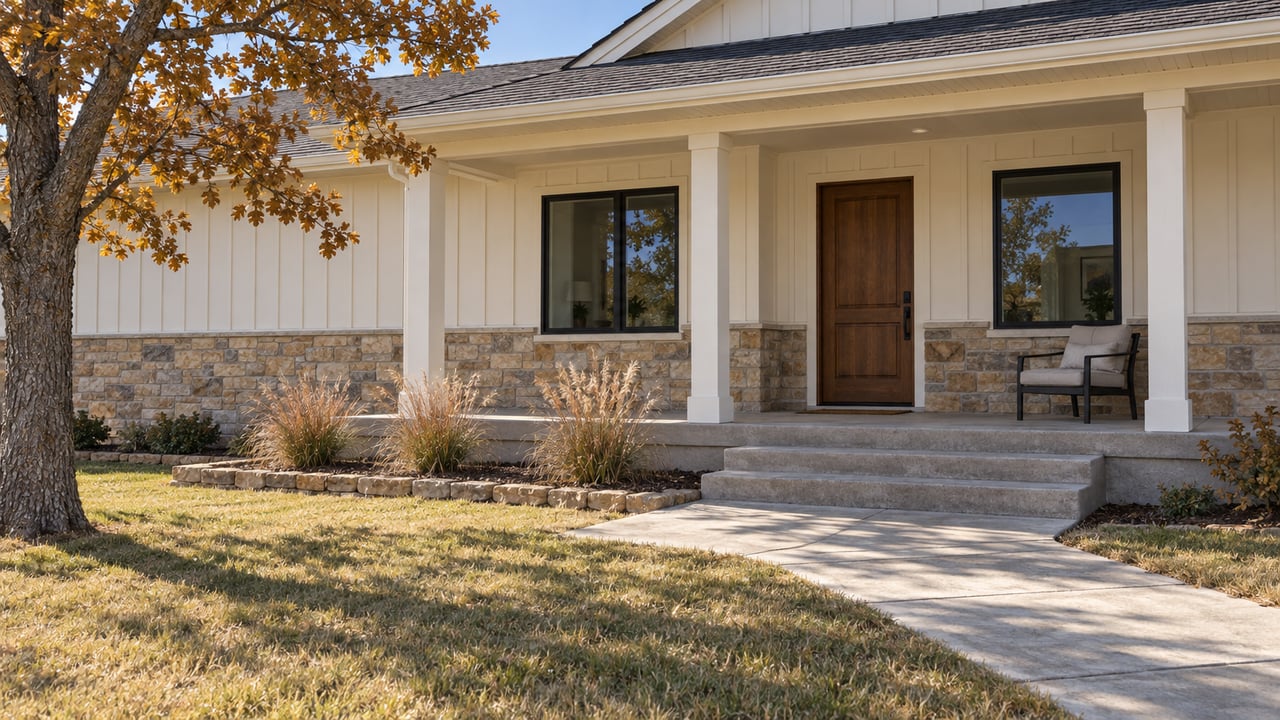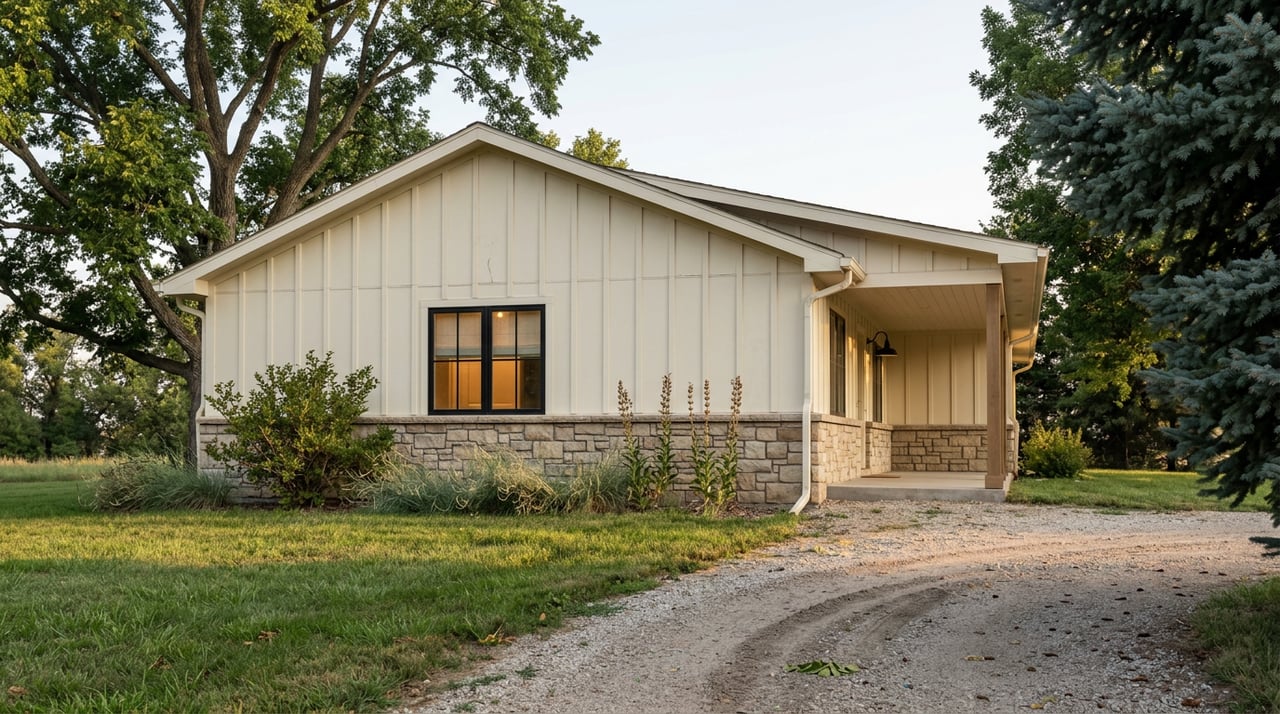
Picture two Wiggins listings sitting side by side on your screen, priced within a few thousand dollars of each other. One is a lot inside town limits, walking distance from Main Street, with underground utilities already stubbed to the property line. The other is a few acres out past the town boundary, backed up to open cropland, no visible fence, no visible neighbor. Same price. Same square footage on the eventual house. Completely different purchase.
That difference is not about finish level or lot shape. It comes down to a single question almost nobody asks until the inspection period: where does the water come from, and who is responsible for it once you own the place. In Wiggins right now, that question has a more complicated answer than it did five years ago, because the town itself is in the middle of fixing its own water supply.
The Line Morgan County Draws in Half-Acres
Start with the rule that quietly separates every parcel in the area into one of two categories. Morgan County's subdivision regulations set a minimum lot size of 2.5 acres for any parcel that will rely on both a private well and a septic system. If the parcel is instead served by a public or private water system and only needs its own septic, that minimum drops to one acre. That single distinction is why an acreage listing south of town and a compact in-town lot are not variations on the same product. They are governed by different math before a shovel ever goes in the ground.
Morgan County's development rules also require permits in three areas for any new build: floodplain, sewage disposal, and driveway access. None of those are optional, and none are county discretion. They are imposed by state and federal law, which means a buyer cannot negotiate around them, only plan for them.
For an acreage buyer, that means the lot size on the listing sheet is not just a lifestyle number. It is the difference between a parcel that can legally support a well and septic system and one that cannot, at least not without additional variances. For an in-town buyer, it means your septic and driveway permits are still required, but your water question is handled by someone else: the town.
Which raises the more interesting problem.
Why the Line Is Moving Right Now
Wiggins draws most of its municipal water from three wells pulling out of the Kiowa-Bijou basin, plus two more recently drilled wells pulling from the South Platte River, according to local water reporting. The town also holds permits for two additional Kiowa-Bijou wells that haven't been drilled yet. For years, water levels in those existing town wells have been falling while mineral content has been rising, a combination that eventually threatens both supply and taste.
The town's response has been underway for longer than most buyers realize. The Town of Wiggins Water Enterprise was established back in 2010, and a water conservation ordinance adopted in 2015 already sets watering schedules for shortage conditions. More recently, the town has been building toward a new pipeline, financed through the Colorado Water Conservation Board rather than USDA Rural Development, a choice made specifically because the CWCB process was faster and the funding could be applied to a non-potable water project. That pipeline plan traces back to a 2017 feasibility study on a recharge facility at the Glassey Farm, prepared by the town's own manager, Paul Larino, and built on engineering work from Diamondback Engineering & Surveying and water rights analysis from attorney Rick Fendel. The town has also picked up shares in the Weldon Valley Ditch Company as part of shoring up its water supply, and it operates recharge ponds meant to bank water for drier years.
This is not ancient history. Materials presented to the Wiggins Board of Trustees on February 11, 2026 show the town still actively working through this financing, and the same meeting reviewed new EPA limits on PFAS chemicals in drinking water, a reminder that Wiggins is being asked to meet rising water quality standards while its supply system is still mid-repair.
None of this means Wiggins water is unsafe. It means the town's capacity to add new water taps is a live, moving variable, not a fixed utility line item. That is exactly why several active build-ready lots inside town limits are marketed with the water tap called out as a separate purchase, not included in the listing price. It is not an oversight. It is an accurate reflection of where the town's water capacity currently stands.
What Each Kind of Lot Actually Asks of You
| In-town lot (town water and septic) | Acreage parcel (private well and septic) | |
|---|---|---|
| Minimum lot size | Set by town annexation and zoning, typically well under an acre | 2.5 acres under Morgan County rule |
| Water source | Town wells, plus a pipeline project the town is still financing | Your own well, permitted through the state Division of Water Resources |
| What can delay closing | Water tap availability and cost, often a separate line item from the lot price | Well production, water quality, and septic suitability, which depend on soil conditions specific to that parcel |
| What you're really inspecting | The town's utility commitment and any tap fee schedule | The well's flow rate and water quality, plus the septic system's age, permit status, and setback compliance |
| Ongoing exposure | Municipal rate structure and future conservation ordinances during shortages | Well maintenance, water testing, and eventual septic pumping and repair, all on you |
Neither column is the safer choice by default. They are different sets of homework.
What the Price Per Acre Actually Hides
Here is where the numbers get interesting. Raw land listed around Wiggins currently runs close to $6,349 per acre on average. But once a listing includes a house sitting on acreage, the average jumps to roughly $75,266 per acre. That is not a story about dirt getting more valuable. It is a story about what sits on top of the dirt and underneath it: a permitted well, a functioning septic system, a driveway that already cleared its permit, a house connected to power. The land barely moves the number. The infrastructure does almost all of the work.
That gap is the clearest evidence for the thesis running through this whole comparison. In Wiggins, you are rarely buying an acre. You are buying whatever water and waste system that acre already has, or doesn't have, and the price reflects that far more than it reflects the ground itself.
The Town Is Also Betting on More Rooftops
The same February 2026 materials that detailed the town's water financing also laid out its growth expectations. Two commercial-zoned and two residential-zoned developments already in motion are projected to bring as many as 310 jobs to Wiggins and add roughly 500 new single-family units and 150 multi-family units over the next five years. Trustees were also weighing whether to adopt an accessory dwelling unit ordinance, the kind of rule that would let homeowners add a rentable casita or garage apartment. As of that meeting, no such ordinance existed yet. It would need public hearings before the Planning Commission and the Town Board before anything changes.
Put those numbers next to the town's population, estimated at just over 2,088 in 2026 and already growing at more than 5 percent a year. Adding 650 new housing units to a town that size is not incremental. Even a conservative estimate of two residents per household points to well over a thousand new neighbors, arriving in the same years the town is still working through the water pipeline that's supposed to serve them.
That is useful context if you're comparing a lot today against what the same street might look like in five years. Water tap availability that feels tight now could loosen once the pipeline is finished, or it could stay tight longer if rooftops arrive faster than the pipeline does. Either way, it's a variable, not a constant, and it belongs in your decision the same way school boundaries or road access would.
Questions Worth Asking Before You Write an Offer
- If it's an in-town lot: has the water tap already been purchased and assigned to this parcel, or is that step still ahead of you?
- If it's an acreage parcel: does the lot meet the 2.5-acre minimum for a combined well and septic system, and has the well's flow rate and water quality actually been tested, not just assumed?
- For any septic system on the property: when was it last pumped, and does county paperwork show it as currently permitted?
- For any home near Bijou Creek or other drainage: has the floodplain permit question been resolved, since it's one of the three permit categories Morgan County treats as non-negotiable?
- For build-ready lots marketed as buy now, build later: what exactly is included, and what costs are still to come?
A Couple of Straight Answers
Does Morgan County require a septic inspection every time a property sells? Requirements are set county by county, and they can change. Confirm the current rule directly with Morgan County's health department before you rely on any general answer, including this one.
Can I add a rentable accessory unit on a Wiggins property today? Not yet inside town limits. As of the town's February 2026 discussion, no ADU ordinance was in place, and adopting one would require public hearings first. Outside town limits, the county's acreage and septic rules would shape whether a second structure with its own systems is even feasible on a given parcel.
Water and septic questions rarely show up on a listing sheet, but they decide more about a Wiggins purchase than the square footage does. If you're weighing an in-town lot against acreage, or trying to figure out what a specific parcel's well and septic situation actually means for your budget and your timeline, Best Life Realty can walk through it with you in plain language, in English or Spanish. Let's Connect before you write the offer, not after.
This article is general information, not legal, tax or financial advice. Consult a qualified professional about your situation.